
The African Astronomical Society (AfAS) was established to advance the field of astronomy across the continent by connecting African astronomers, fostering collaboration, organising annual meetings, and promoting public engagement and astronomy research. The African Astronomical Society’s founding principle is to become the voice of astronomy in Africa and to address the challenges faced by Africa through the promotion and advancement of astronomy. AfAS’s objective to develop astronomy and human capacity is made easier to realise by its location and links to one of the oldest astronomical observatories on the continent – the South African Astronomical Observatory (SAAO) – and the radio astronomy infrastructures, together with its Africa partners, and a very youthful and vibrant population keen to pursue careers in astronomy.
Hosted at the South African Astronomical Observatory, with its proximity to many academic institutions that train the next generation of astronomers, means that visiting astronomers have unbounded opportunities to network across institutions. Since the building of the Southern African Large Telescope (SALT) and the establishment of the National Astrophysics and Space Science Programme, the South African Astronomical Observatory has trained many young astronomers who are now back in their own countries with thriving careers in astronomy research. According to Dr. Charles Takalana, the former AfAS Head of Secretariat, “AfAS provides a place to strengthen links and provide access to different astronomy infrastructures within the continent like the African Integrated Observation System (AIOS), whose objective is to create a Pan-African Intelligent Telescope Network.” This network will merge existing African facilities to provide scientific opportunities, rapid follow-up observations, shared telescope access, exchange programs, outreach, and capacity building, he added.
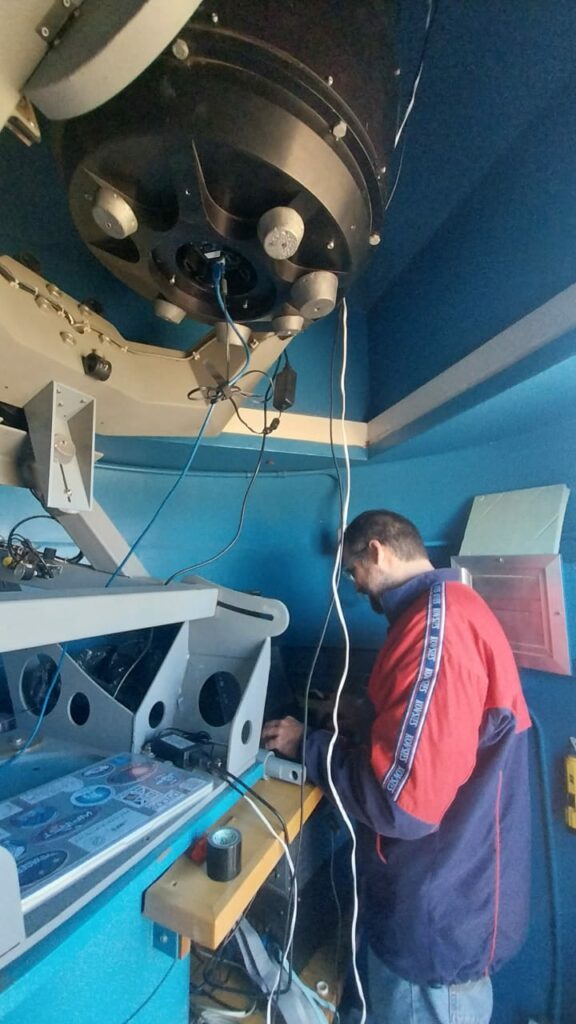
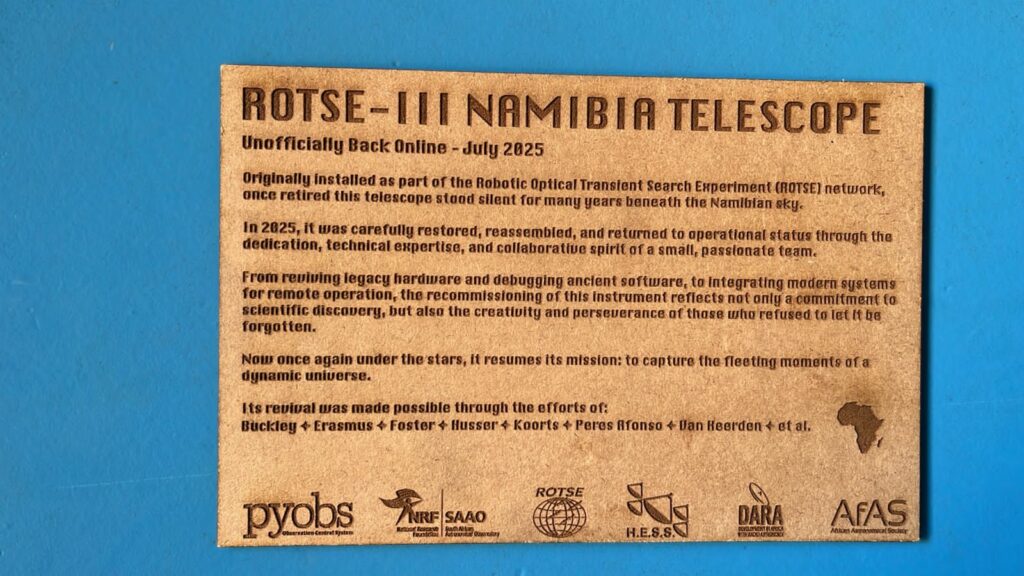
The South African Astronomical Observatory has played a pivotal role in hosting a number of the African Astronomical Society meetings since the relaunch, until Wits University hosted the first conference held out Cape Town in 2023. Many astronomers stay on at various AfAS conference-hosting institutions for further collaborations with local astronomers. As such, the hosting of the African Astronomical Society secretariat at SAAO is mutually beneficial. To highlight the inextricable relationship, the newly refurbished AfAS Robotic Optical Transient Search Experiment telescope (ROTSE) located in Namibia, which is part of a worldwide network of telescopes located in different parts of the world (Turkey, Australia, and McDonald Observatory in Texas), received a CCD camera donation from the South African Astronomical Observatory. The objective of the reactivation of ROTSE for AfAS astronomers is the hope that transient science will advance collaborations and scientific output from the continent. The telescope will focus on the emerging field of multi-messenger astronomy, specifically the search for optical counterparts to gravitational wave events. It is hoped that ROTSE will play a vital role in both discovery and synoptic monitoring, unveiling new research focus areas for African participation in global collaborations. The South African Astronomical Observatory plans to integrate the telescope into its intelligent observatory network. Given the astronomy infrastructure development on the continent and the understanding of the need to build capacity, AfAS endorses many astronomy schools whose aim is to sharpen the skills of the future workforce in astronomy and to encourage cross-continent collaborations, as well as breaking cultural barriers among Africans.