
My inspiration to enter the field of astronomy came from a fascination with physics and a deep curiosity about how and why the cosmos functions, and our true place within our galaxy. A strong foundation in mathematics, physics, and coding proved invaluable during my undergraduate studies at the University of Pretoria (UP), where I completed my BSc and Honours degrees in Physics and Mathematics, while also taking elective courses in Astronomy and Chemistry, since UP did not have a BSc program in pure astronomy. I ultimately decided to fully commit to astronomy and applied for funding opportunities to pursue a Master’s (MSc) degree.
At the final possible moment, I was fortunate to be awarded one of the SALT/SAAO Prize Scholarships for my MSc project at the University of Cape Town (UCT) and the South African Astronomical Observatory (SAAO). Under the supervision of Dr. Vanessa McBride, I studied radio sources in the field of the Small Magellanic Cloud (SMC) dwarf galaxy using MeerKAT observations, for which she serves as Principal Investigator. The raw dataset comprised two L-band continuum images centred on the high-mass X-ray binaries SXP1062 and SXP1323. Although these systems have been extensively studied, my project focused on the numerous other radio sources visible within the same fields. Owing to the large field of view, high sensitivity, and excellent resolution of MeerKAT, thousands of radio sources were detected within a 1.5-degree radius of the central XRBs. My MSc project aimed to characterise these sources using a combination of optical spectroscopy and citizen science through the Zooniverse platform.
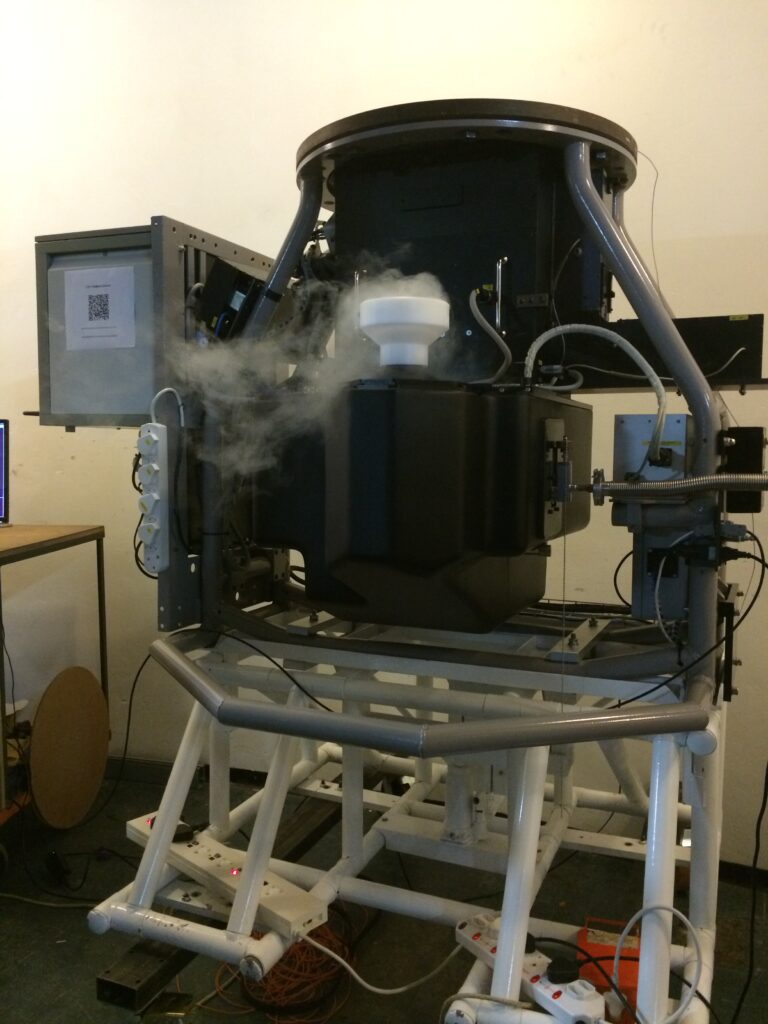
The two fields contained a mixture of foreground (Galactic), Small Magellanic Cloud (SMC), and background (extragalactic/AGN) sources. In total, 912 sources were morphologically characterised, with additional classifications informed by results from Zooniverse and from my spectroscopic observations. I conducted these observations using the SAAO 1.9-m telescope with the SpUpNIC spectrograph, targeting a list of 41 selected sources. Due to various observational constraints, I was able to observe 23 of these, prioritising those without prior identification in the literature. Many of the observed optical sources are believed to be counterparts to the radio sources detected at corresponding coordinates in the MeerKAT data.
This work contributes to our collective scientific understanding by expanding the catalogue of known astronomical sources, thereby enabling other researchers to make discoveries or validate existing findings through independent analyses. The most significant outcomes of this project include a MeerKAT-derived radio source catalogue containing 10,873 source entries, produced by collaborators on the MeerKAT data as well as my own databases derived from the spectroscopic and citizen science analyses. These include what we believe to be eight radio stars for which radio detections were linked to optical counterparts for the first time.
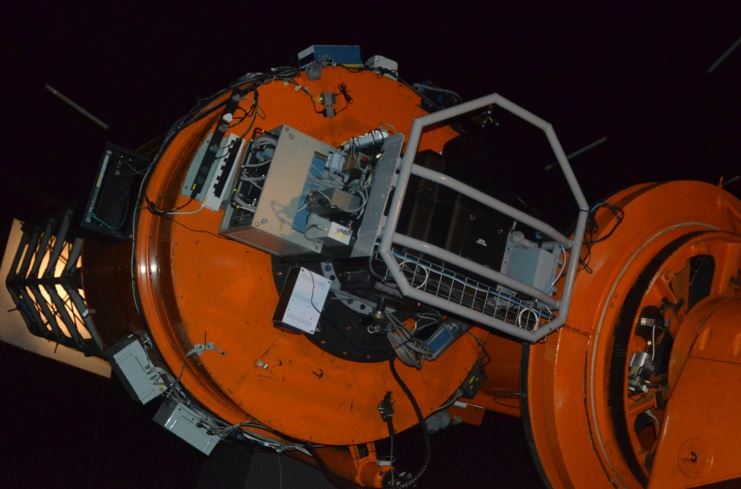
This multi-wavelength project relied on both the MeerKAT radio telescope and the SAAO 1.9-m telescope, each of which was instrumental to its success. I received practical training in conducting my own spectroscopic observations with SpUpNIC while operating the SAAO telescope, and in doing so, I developed a deeper understanding of the processes underpinning rigorous scientific research, along with valuable analytical and coding skills. Through the training and support provided by the NRF, SAAO, SALT, and MeerKAT collaborations, I have grown into a more confident and capable researcher. This outcome would not have been possible without the funding I received through the SALT/SAAO Prize MSc Scholarship. I am currently at the initial stages of my PhD, studying optical and near-infrared variability in Be/X-ray binaries under the supervision of Dr. Lee Townsend and Dr. Itumeleng Monageng. I am deeply grateful to the National Research Foundation for their continued support in this next stage of my academic journey, during which I aim to build further upon the scientific and analytical skills developed during my MSc.