
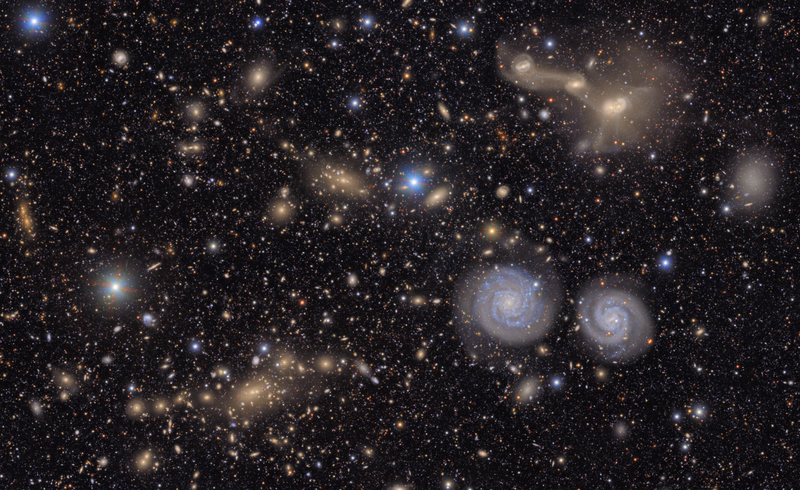
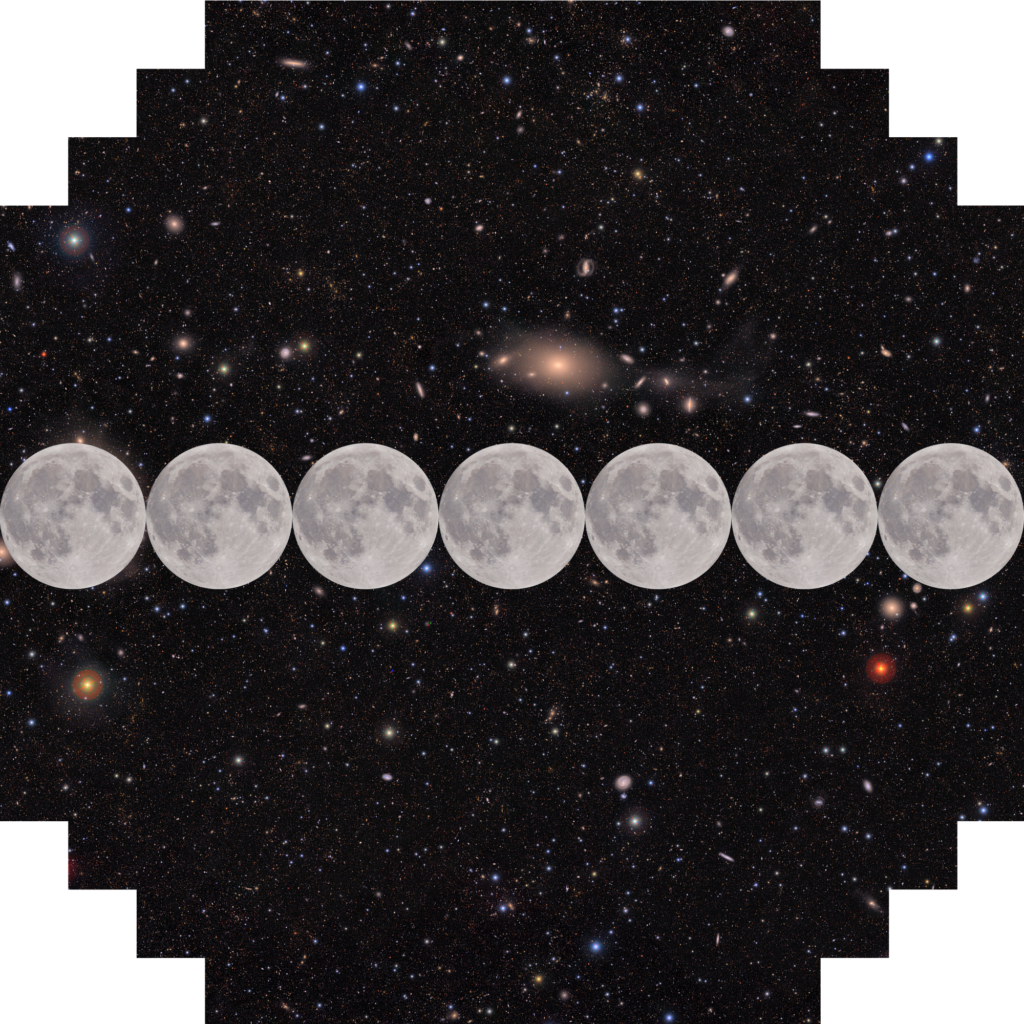
The Vera C. Rubin Observatory’s Legacy Survey of Space and Time (LSST) is among the most ambitious astronomy projects ever undertaken. With its unparalleled 8.4-meter primary mirror, a 3200-megapixel camera, a 9.6-square-degree field of view, and the capability to survey the entire accessible sky every few nights, the LSST will generate a decade-long dataset of the Universe. The first images from the mission released to the public are incredibly impressive. The mission aims to significantly enhance our understanding of various areas in astrophysics, including the solar system bodies, transient and variable stars, dark energy, and dark matter. Made possible by the LSST’s observing cadence and depth, it will be possible to detect millions of such objects—far more than any previous survey. Without a facility of this magnitude, much of this research would be either impossible or restricted to small, biased samples.
As a USA-funded mission, the data from the Vera C. Rubin Observatory will be readily available to researchers in the USA and Chile. Select individuals from outside those countries will only have access to the data through contributions to the LSST and by enabling follow-up observations. In light of contributions from the South African Astronomical Observatory (SAAO) and the Department of Science and Technology Innovation (DSTI), South Africa has appointed ten Principal Investigators (PIs), who have full access to the LSST dataset. Each PI has associated Junior Affiliates, including postgraduate students, postdocs, and early-career researchers. Access to the LSST opens doors that would otherwise remain firmly closed. This direct access is powerful for the South African community, as it will facilitate training in big data analysis (including machine learning and statistical modelling), foster international collaborations with LSST science teams, and create opportunities for postgraduate research projects using high-quality datasets.
South Africa’s own world-class facilities, such as the Southern African Large Telescope (SALT), the South African Astronomical Observatory’s (SAAO) smaller telescopes, MeerKAT, and eventually the Square Kilometre Array (SKA), are ideally positioned to serve as follow-up telescopes for the LSST. The SAAO telescopes, including SALT, will provide rapid optical spectroscopic follow-up to verify and classify targets discovered by the LSST. Furthermore, these telescopes will assist in photometric follow-up through multi-band photometry and time-resolved light curves. Their flexibility and scheduling capabilities make them well-suited to respond quickly to LSST alerts. In addition to optical wavelengths, the LSST will identify transient and variable objects that will be followed up at radio wavelengths with MeerKAT and SKA. This convenient ecosystem of telescopes in South Africa ensures that follow-up observations can be achieved across different regions of the electromagnetic spectrum.
The collaboration between South African researchers and the LSST represents a significant milestone for astronomy in South Africa. It places local researchers and students at the forefront of discovery, equips them with globally relevant skills, and strengthens the scientific ties that make South Africa a vital partner in modern astrophysics.
With access to data from one of the most powerful survey telescopes in the world — and with SALT, MeerKAT, and other local facilities ready to provide crucial follow-up. South African astronomy is exceptionally well-positioned to contribute to some of the most exciting discoveries in the coming decade.